
Dahlia 'Arabian Night'
decorative dahlia

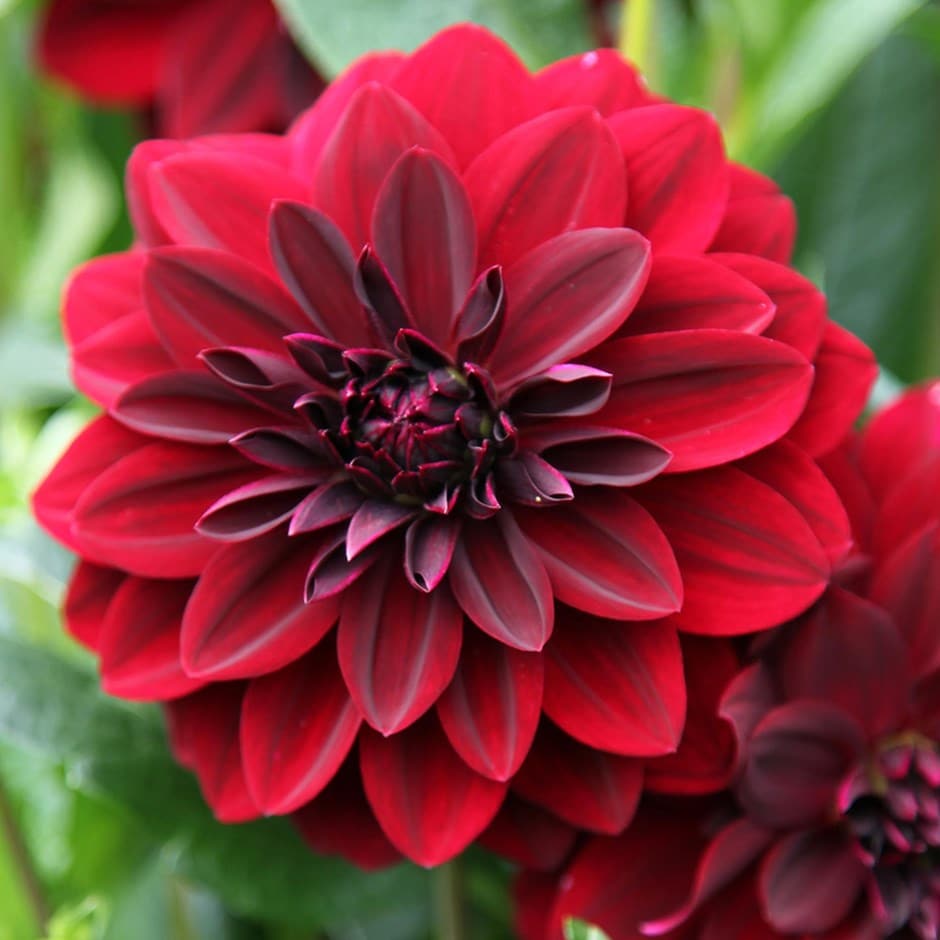
Showy and flamboyant, Dahlia 'Arabian Night' has masses of fully double, dark wine-red flowers with slightly incurved petals from June until the first frosts.
Under certain light, the petals of this diminuative dahlia appear almost black. An ideal companion for plum-coloured flowers and foliage plants, it needs a sheltered, sunny site with fertile, humus-rich soil.
Under certain light, the petals of this diminuative dahlia appear almost black. An ideal companion for plum-coloured flowers and foliage plants, it needs a sheltered, sunny site with fertile, humus-rich soil.
How to care for Dahlia Arabian Night:
Dahlia tubers can be planted outside after frost, or started off in pots under glass in late winter to early spring. Plant them horizontally approximately 12cm deep, making sure the ‘eyes’ are uppermost. Allow enough room between each tuber so the plants can grow and spread to their full size without being overcrowded.
While in growth, provide a high-nitrogen liquid feed each week in June, then a high-potash fertiliser each week from July to September. Stake with canes or brushwood if it becomes necessary. In mild areas, leave them in situ over winter, but protect the crown with a generous layer of dry mulch.
In colder areas, carefully lift and clean the tubers once the first frosts have blackened the foliage and allow them to dry naturally indoors. Then place the dry tubers in a shallow tray, just covered with slightly moist potting compost, sand or vermiculite and store in a frost-free place until planting out again.
While in growth, provide a high-nitrogen liquid feed each week in June, then a high-potash fertiliser each week from July to September. Stake with canes or brushwood if it becomes necessary. In mild areas, leave them in situ over winter, but protect the crown with a generous layer of dry mulch.
In colder areas, carefully lift and clean the tubers once the first frosts have blackened the foliage and allow them to dry naturally indoors. Then place the dry tubers in a shallow tray, just covered with slightly moist potting compost, sand or vermiculite and store in a frost-free place until planting out again.
Flowering period:
- Jan
- Feb
- Mar
- Apr
- May
- Jun
- Jul
- Aug
- Sep
- Oct
- Nov
- Dec
Eventual height:
1.2m
Eventual spread:
0.5m
Position:
Full sun / light shade
Rate of growth:
Fast-growing
Soil:
Moderately fertile, moist, but well-drained soil, or general-purpose loam-based potting compost
Hardiness:
Fully hardy
-
 This bulb dies back after flowering each year and enters a period of rest ahead of regrowth the following season.

-
Humans/Pets: Ornamental bulbs - not to be eaten
Goes well with


Dahlia 'Arabian Night'
decorative dahlia
Showy and flamboyant, Dahlia 'Arabian Night' has masses of fully double, dark wine-red flowers with slightly incurved petals from June until the first frosts.
Under certain light, the petals of this diminuative dahlia appear almost black. An ideal companion for plum-coloured flowers and foliage plants, it needs a sheltered, sunny site with fertile, humus-rich soil.
Under certain light, the petals of this diminuative dahlia appear almost black. An ideal companion for plum-coloured flowers and foliage plants, it needs a sheltered, sunny site with fertile, humus-rich soil.
How to care for Dahlia Arabian Night:
Dahlia tubers can be planted outside after frost, or started off in pots under glass in late winter to early spring. Plant them horizontally approximately 12cm deep, making sure the ‘eyes’ are uppermost. Allow enough room between each tuber so the plants can grow and spread to their full size without being overcrowded.
While in growth, provide a high-nitrogen liquid feed each week in June, then a high-potash fertiliser each week from July to September. Stake with canes or brushwood if it becomes necessary. In mild areas, leave them in situ over winter, but protect the crown with a generous layer of dry mulch.
In colder areas, carefully lift and clean the tubers once the first frosts have blackened the foliage and allow them to dry naturally indoors. Then place the dry tubers in a shallow tray, just covered with slightly moist potting compost, sand or vermiculite and store in a frost-free place until planting out again.
While in growth, provide a high-nitrogen liquid feed each week in June, then a high-potash fertiliser each week from July to September. Stake with canes or brushwood if it becomes necessary. In mild areas, leave them in situ over winter, but protect the crown with a generous layer of dry mulch.
In colder areas, carefully lift and clean the tubers once the first frosts have blackened the foliage and allow them to dry naturally indoors. Then place the dry tubers in a shallow tray, just covered with slightly moist potting compost, sand or vermiculite and store in a frost-free place until planting out again.
Flowering period:
- Jan
- Feb
- Mar
- Apr
- May
- Jun
- Jul
- Aug
- Sep
- Oct
- Nov
- Dec
Eventual height:
1.2m
Eventual spread:
0.5m
Position:
Full sun / light shade
Rate of growth:
Fast-growing
Soil:
Moderately fertile, moist, but well-drained soil, or general-purpose loam-based potting compost
Hardiness:
Fully hardy
-
This bulb dies back after flowering each year and enters a period of rest ahead of regrowth the following season.
-
Humans/Pets: Ornamental bulbs - not to be eaten