







Wisteria sinensis var. sinensis f. alba
Chinese wisteria (syn. Wisteria sinensis Alba)


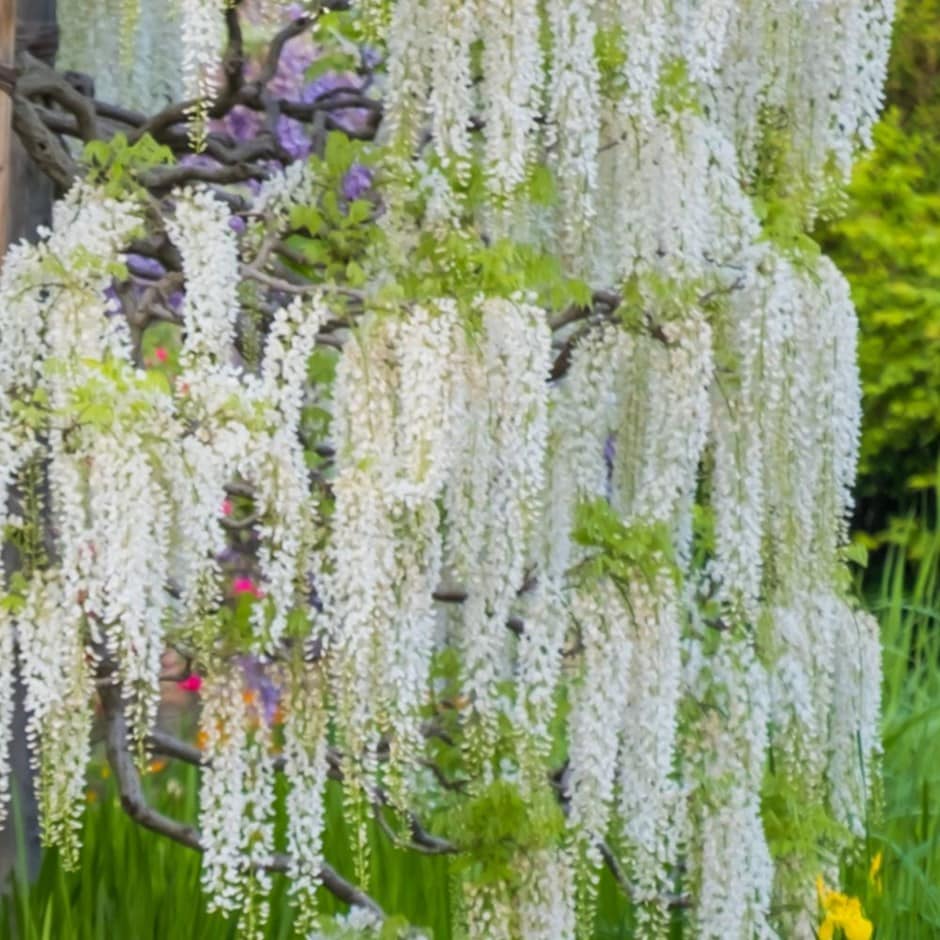
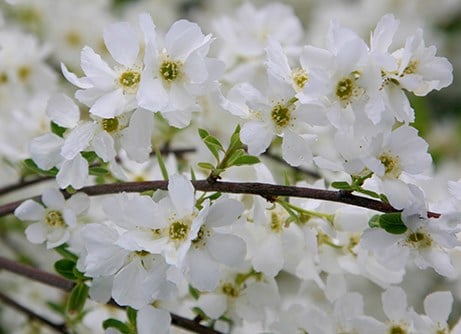
Pendent clusters of fragrant, pure white, pea-like flowers in May and June followed in hot summers by velvety green seed-pods. This classic white Chinese wisteria looks wonderful trained as a small weeping tree. Renowned for its superior fragrance, it's an ideal, fast- growing climber for covering a sheltered, sunny wall or strong pergola.
This plant has been vegetatively propagated, so will flower earlier than those grown from seed.
This plant has been vegetatively propagated, so will flower earlier than those grown from seed.
How to care for Wisteria sinensis var. sinensis f. alba:
To avoid dry conditions, and to ensure good soil contact around the rootball, we advise planting climbers at least 30cm (12in), and preferably 45-60cm (18-24in) away from the base of a wall or fence. An even larger distance should be maintained when planting climbers beside an existing tree or shrub.
To promote flowering, prune the twining stems twice a year in mid-summer and in mid-winter. For wall-training, install a network of stout horizontal wires, attached to the wall at approximately 30cm (12in) intervals.
When planting, add some soil conditioner (well-rotted compost) to the planting hole and some mycorrhizal fungi to aid root establishment. After planting, prune the leading shoot of your wisteria back to approximately 90cm (3ft) above ground level and remove any side branches to encourage a new leader to form. In the summer of the first growing season, tie the leader in vertically and choose two new lateral shoots on either side of this leader.
Tie these onto the wires at a 45-degree angle. Prune smaller shoots on these lateral branches to two or three buds. In the first winter, prune the leader to a bud approximately 75cm (2.5ft) above the highest lateral branch. Gently untie the lateral branches, prune them (approx. a third), then re-tie onto a wire so they are nearly horizontal.
In subsequent summers, tie in the leader as it grows and choose two strong laterals to form the next tier. These should then be tied in at a 45-degree angle and any smaller shoots coming from these should be pruned to two or three buds. In subsequent winters prune the leading shoot as before and cut back and re-tie the new laterals to a near-horizontal position.
The older laterals can be pruned by about a third of their total length. Once established and the desired height reached, keep tying in the lateral stems as they spread out. In summer, prune the wispy stems on both the laterals and sub-laterals (the side shoots from the laterals) to about five or six buds from the main branches.
To promote flowering, prune the twining stems twice a year in mid-summer and in mid-winter. For wall-training, install a network of stout horizontal wires, attached to the wall at approximately 30cm (12in) intervals.
When planting, add some soil conditioner (well-rotted compost) to the planting hole and some mycorrhizal fungi to aid root establishment. After planting, prune the leading shoot of your wisteria back to approximately 90cm (3ft) above ground level and remove any side branches to encourage a new leader to form. In the summer of the first growing season, tie the leader in vertically and choose two new lateral shoots on either side of this leader.
Tie these onto the wires at a 45-degree angle. Prune smaller shoots on these lateral branches to two or three buds. In the first winter, prune the leader to a bud approximately 75cm (2.5ft) above the highest lateral branch. Gently untie the lateral branches, prune them (approx. a third), then re-tie onto a wire so they are nearly horizontal.
In subsequent summers, tie in the leader as it grows and choose two strong laterals to form the next tier. These should then be tied in at a 45-degree angle and any smaller shoots coming from these should be pruned to two or three buds. In subsequent winters prune the leading shoot as before and cut back and re-tie the new laterals to a near-horizontal position.
The older laterals can be pruned by about a third of their total length. Once established and the desired height reached, keep tying in the lateral stems as they spread out. In summer, prune the wispy stems on both the laterals and sub-laterals (the side shoots from the laterals) to about five or six buds from the main branches.
Flowering period:
- Jan
- Feb
- Mar
- Apr
- May
- Jun
- Jul
- Aug
- Sep
- Oct
- Nov
- Dec
Eventual height:
12m
Eventual spread:
8m
Position:
Full sun
Rate of growth:
Fast-growing
Soil:
Moderately fertile, moist, well-drained soil
Hardiness:
Fully hardy
-
 This climber is deciduous so it will lose all its leaves in autumn, then fresh new foliage appears again each spring.

-
Humans/Pets: Harmful if eaten


