






Bumper woodland collection
bulb collection

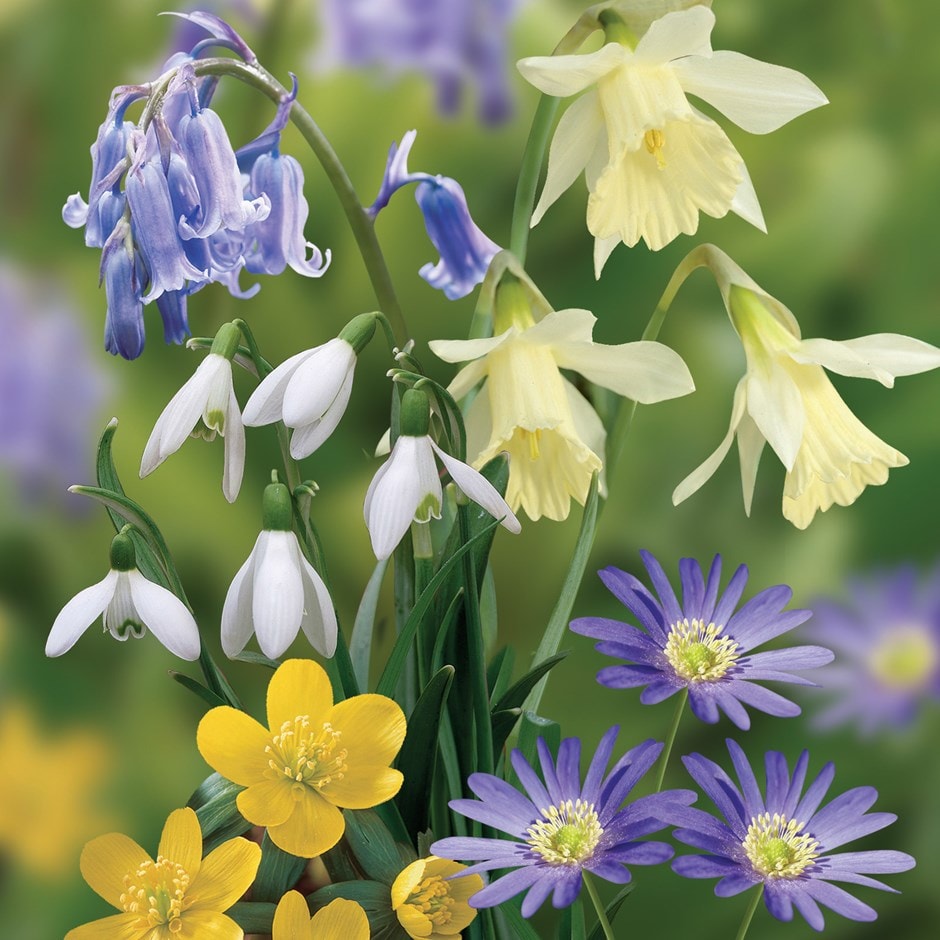
This collection offers a great way to create a swathe of early colour that will last for several months from late winter to late spring. The bulbs can all be left in the ground for several years where they will gradually spread.
How to care for Bumper woodland collection:
Plant bulbs as soon as possible after arrival into well-prepared, moisture-retentive but free-draining soil. This collection is ideal for naturalising beneath deciduous trees and shrubs, in woodland gardens, or along the front of borders where the succession of late winter and spring flowers can be fully appreciated (it is not intended as a full mixed pot display). Water after planting and during prolonged dry spells in the first growing season, particularly in lighter soils, and apply a balanced fertiliser in early spring to encourage healthy growth and flowering.
As a general guide, plant Eranthis around 5cm (2in) deep, soaking the tubers overnight before planting if they appear dry. Plant Anemone blanda tubers around 5cm (2in) deep after soaking for several hours. Plant snowdrops (Galanthus nivalis) around 8-10cm (3-4in) deep, English bluebells (Hyacinthoides non-scripta) around 10cm (4in) deep, and daffodils approximately three times the height of the bulb (typically 10-15cm / 4-6in). Space bulbs generously to allow them to establish and spread naturally over time.
Allow the foliage to die back naturally after flowering so the bulbs can store energy for the following season. Most of the bulbs in this collection will naturalise readily in suitable conditions, gradually forming colourful drifts that return reliably each year. English bluebells and winter aconites will slowly spread where happy, while anemone, snowdrops and daffodils will also increase steadily, creating an ever-improving display with minimal maintenance once established.
As a general guide, plant Eranthis around 5cm (2in) deep, soaking the tubers overnight before planting if they appear dry. Plant Anemone blanda tubers around 5cm (2in) deep after soaking for several hours. Plant snowdrops (Galanthus nivalis) around 8-10cm (3-4in) deep, English bluebells (Hyacinthoides non-scripta) around 10cm (4in) deep, and daffodils approximately three times the height of the bulb (typically 10-15cm / 4-6in). Space bulbs generously to allow them to establish and spread naturally over time.
Allow the foliage to die back naturally after flowering so the bulbs can store energy for the following season. Most of the bulbs in this collection will naturalise readily in suitable conditions, gradually forming colourful drifts that return reliably each year. English bluebells and winter aconites will slowly spread where happy, while anemone, snowdrops and daffodils will also increase steadily, creating an ever-improving display with minimal maintenance once established.
What's included:
In each collection you will receive the following:
- 10 × Eranthis cilicica: Carpets of bright yellow, buttercup-like flowers in late January and February surrounded by ruffs of fresh green leaves. Winter aconites originate from damp woodland and shady places in Eurasia so are perfect for naturalising under deciduous shrubs and trees. They are a welcome sight in late winter as they are one of the first things into flower in the garden. Grows to 8cm.
- 25 × Anemone blanda blue-flowered: This is a wonderful plant that produces cheerful, daisy-like flowers in shades of blue and purple in March and April. These are perfect plants for naturalising in a mixed border around the base of deciduous shrubs, or adding spring colour to the edge of a woodland garden. For maximum impact, plant in bold drifts in September or October, and if happy, they should spread quite quickly. Grows to 15cm.
- 10 × Narcissus 'W.P. Milner': The pale lemon coloured flowers of this cultivar fade to creamy white almost as soon as they open, so really stand out on darker spring days. This time-honoured daffodil has been around since Victorian times, when it was valued for its slightly twisted petals and nodding flowerheads, which create an unstructured looking flower. This also makes it perfect for wilder style gardens and open woodland where it can be left to form large clumps. Grows to 20cm.
- 15 × Galanthus nivalis: It's hard not to love these wonderful bulbs for adding colour to the garden when little else is awake. The nodding white flowers have a small green marking on the inside of each tepal, are honey scented, and appear in late winter. They look particularly good planted in large drifts in grass where they will naturalise quite happily. Alternatively plant them up in clumps in the front of mixed borders, or into pots so they can be admired close up. Plant the bulbs as soon as possible after delivery to prevent the bulbs drying out. Grows to 10cm.
- 10 × Hyacinthoides non-scripta: English bluebells are much loved for their stout spikes of bell-shaped, blue flowers in April and May. They are perfect for naturalising in a partly shaded woodland garden or underneath the canopy of deciduous trees. They quickly spread to form large clumps, so if you want to keep the numbers down in herbaceous or mixed borders, it's best to remove the faded flowerheads to prevent the plant from becoming invasive. Grows to 40cm.
Position:
Full sun / light shade
Rate of growth:
Fast-growing
Soil:
Moderately fertile, moist, well-drained soil
Hardiness:
Fully hardy
-
 This bulb dies back after flowering each year and enters a period of rest ahead of regrowth the following season.

-
Humans/Pets: Ornamental bulbs - not to be eaten


