






Allium ursinum
wild garlic (syn. Allium ursinum)


Fresh, punchy and packed with flavour, this easy-going woodland perennial brings both beauty and usefulness to your garden in one go, offering edible leaves, seasonal interest and real wildlife value.
This is a naturally spreading plant, so give it space to settle and avoid placing it where a more restrained habit is needed. It will die back in summer after flowering, which is completely normal, so it’s best combined with later-emerging plants that can take over once it fades.
Seasonal interest and naturalising habit
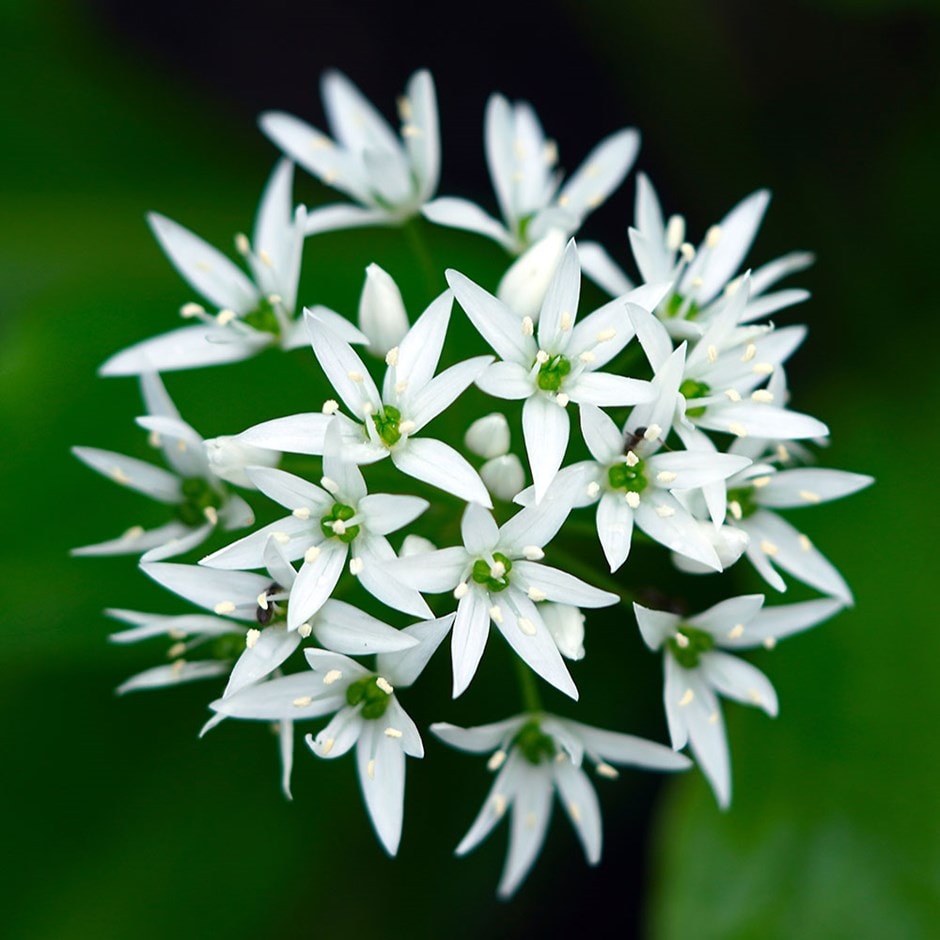
In mid to late spring, clusters of star-shaped white flowers rise above the foliage, creating a soft, naturalistic display often associated with deciduous woodland and hedgerows. As a spreading ground cover plant, it gradually naturalises over time, making it ideal for filling shady spaces with low-maintenance planting that returns reliably each year.Perfect for shade and damp soils
Wild garlic grows best in moist, humus-rich soil in partial to full shade, making it particularly useful for tricky areas under trees or along north-facing borders. It copes well with heavier soils and damp conditions, where many other plants struggle, and once established, it requires very little attention.Wildlife-friendly benefits
The open, nectar-rich flowers attract pollinators such as bees and hoverflies, helping to support garden biodiversity early in the season. By planting Allium ursinum, you’re not just adding edible interest, but also creating a valuable habitat for beneficial insects.Harvesting and use
Pick the young leaves before flowering for the best flavour, when they’re fresh and full of that gentle garlic kick. The flowers are also edible and work well as a light garnish for salads and savoury dishes. For longer use, finely chop the leaves and freeze them in ice cube trays with a little water or oil, ready to drop straight into cooking whenever you need them.Where to plant
Wild garlic is ideal for naturalising in informal planting schemes, particularly beneath deciduous trees, along shady borders, or in woodland-style gardens. It works well in areas where other plants can struggle, though does need some establishment, gradually forming a soft, green carpet that fills gaps and brings seasonal interest to overlooked spaces.This is a naturally spreading plant, so give it space to settle and avoid placing it where a more restrained habit is needed. It will die back in summer after flowering, which is completely normal, so it’s best combined with later-emerging plants that can take over once it fades.
How to care for Allium ursinum:
Wild garlic prefers moist, humus-rich soil in partial to full shade, making it ideal for woodland-style planting or under deciduous trees and shrubs. Plant between 15-30cm (6-12in) apart. Once established, it can spread quite freely, so it's best to keep it contained if you don't want it to naturalise. If it becomes too vigorous, clumps can be lifted and divided in autumn or early spring.
In early spring, as growth begins, apply a balanced, slow-release fertiliser to support healthy foliage and flower development. Water during dry spells, especially in the first year after planting. Allow the leaves to die back naturally after flowering, as this helps feed the bulbs for the following year. Only tidy up once the foliage has fully withered to avoid weakening the plants.
In early spring, as growth begins, apply a balanced, slow-release fertiliser to support healthy foliage and flower development. Water during dry spells, especially in the first year after planting. Allow the leaves to die back naturally after flowering, as this helps feed the bulbs for the following year. Only tidy up once the foliage has fully withered to avoid weakening the plants.
Sowing instructions:
Sow the seed up to 2cm deep where you want them to grow at any time of the year. Alternatively, sow them shallowly in seed trays in trays in autumn and maintain temperatures at approximately 20C for 2-4 weeks. Then, place the seed tray in an unheated greenhouse or cold frame throughout the winter. The warmer temperatures in spring should then trigger the germination process and the seedlings can be planted out.
Flowering period:
- Jan
- Feb
- Mar
- Apr
- May
- Jun
- Jul
- Aug
- Sep
- Oct
- Nov
- Dec
Eventual height:
0.4m
Eventual spread:
1m
Position:
Full sun / light shade
Rate of growth:
Fast-growing
Soil:
Moderately fertile, moist, well-drained soil
Hardiness:
Fully hardy
-
 This perennial dies back to below ground level each year in autumn, then fresh new growth appears again in spring.

-
Pets: TOXIC if eaten


